



Translate Website to Turkish: Casing, Agglutination & UI Risk
Turkish website localization: locale-aware casing, agglutination overflow, and full-sentence UI strings.
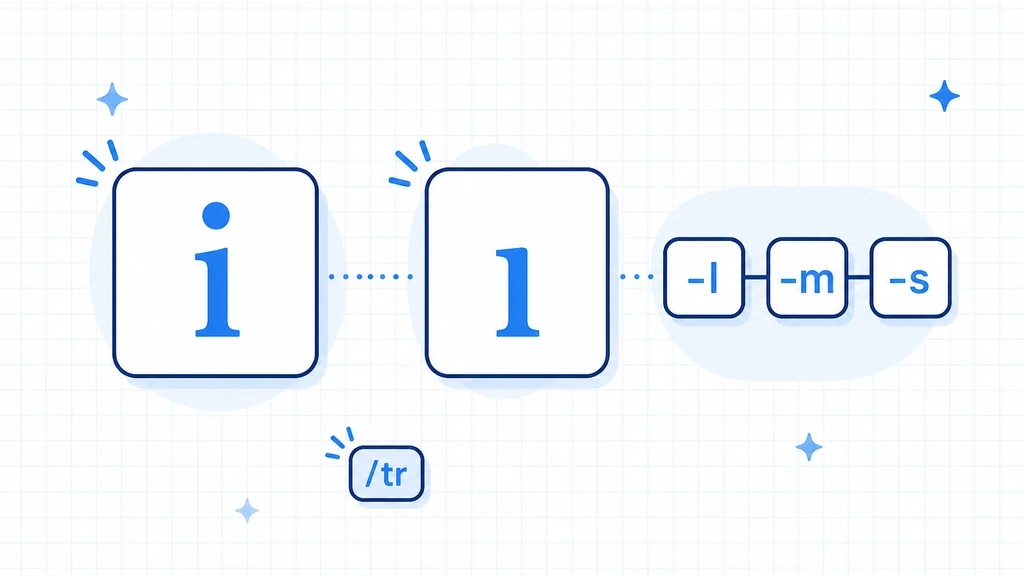
If your brief says “translate the website to Turkish,” stop treating the job as a string swap. Turkish on the web is an engineering-and-grammar problem: agglutination builds long tokens, dotted İ and dotless I break naive toUpperCase(), and vowel harmony makes bolted-on suffixes sound wrong.
This article is a launch guide for a Turkish (tr) website version: locale choice, casing and fonts, full-sentence UI strings, crawlable URLs, checkout QA, MTPE vs human review, SEO pitfalls, and a checklist you can actually run.
What does it take to translate a website to Turkish beyond swapping strings?
Beyond CMS fields, you need locale-aware case transforms (or no transforms), layouts that survive agglutinated labels, message catalogs written as whole sentences rather than concatenated fragments, a pipeline that preserves ğüşöçığı, a consistent formal/informal address, and QA cases that English never needed. Turkish will expose every place your codebase assumes English words are short and casing is harmless.
Questions this guide answers
- What does it take to translate a website to Turkish beyond swapping strings?
- Which Turkish locale or regional variants should you choose?
- What script, typography, and layout issues are unique to Turkish?
- How should URLs, hreflang, and indexing work for a Turkish site version?
- What onboarding and checkout nuances matter in Turkish?
- Should you use AI translation, MTPE, or human review for Turkish?
- What SEO mistakes specifically hurt Turkish pages?
- How do you launch and measure a Turkish website version?
Quick answer: translate your website to Turkish the right way
A durable Turkish launch looks like this:
- Treat string design as product work. Agglutination creates long words; UI that assumes English token lengths will overflow badges, tabs, and filters.
- Ship
tr(typicallytr-TR) as its own crawlable URL—not a cookie-only switch. - Fix casing utilities before you scale copy: dotted İ / dotless I break default JavaScript and many backend uppercasing helpers. Use locale-aware transforms—or avoid transforming Turkish strings.
- Translate core journeys as full sentences. Concatenated fragments ignore vowel harmony and produce unnatural suffixes.
- Preserve ğ, ü, ş, ö, ç, ı, and İ through CSV, CMS, search, and email. ASCII-folding Turkish is vandalism.
- Add reciprocal hreflang, same-language canonicals, and sitemaps before you scale.
- Put product nouns and address register in a glossary so MTPE cannot mix sen/siz or invent suffixes.
CSA Research’s survey of 8,709 consumers in 29 countries found 76% prefer buying with information in their own language and 40% will never buy from websites in other languages. That still holds when some Turkish speakers also read English: checkout, invoices, and support are where an English-only journey loses the sale. Google’s helpful-content guidance favors people-first pages; a Turkish nav around English body copy is a weak locale. For market-versus-language strategy, read how international SEO differs from multilingual SEO.
Choose the right Turkish locale
Most teams should ship tr with a Turkey-oriented tr-TR URL as the first commercial market. That is a reasonable first release. It is not a license to mix formal siz invoices, informal sen ads, and ASCII-folded search indexes in one file and call it “the Turkish locale.”
Turkish is one language with register and diaspora differences. You can still architect one tr message file on day one. You should not pretend a consumer-app sen voice automatically belongs on a banking checkout. Put the audience and address form in the brief and keep it consistent across ads, product UI, and support.
A single tr file can be the right first ship if you are not localizing contracts yet—just do not treat English-mix social copy as the source of truth for a Turkey storefront.
Also decide how you will handle names, addresses, and phone numbers. Forms that reject ğüşöçı, force ASCII-only names, or uppercase names with English locale rules will fail after the strings look “translated.”
Turkish script, typography, and layout nuances
Turkish uses a Latin-based alphabet with letters English fonts often subset badly: ğ, ü, ş, ö, ç, ı, and dotted İ. Characters must survive CMS fields, emails, PDFs, and autogenerated titles. A font stack that only tested English will drop glyphs or render ı as i.
Three layout and engineering rules that prevent launch-week incidents:
Casing. Turkish locale rules differ for i/I. Uppercasing navigation labels with default JavaScript casing is a classic production bug (i → I instead of İ). Disable naive toUpperCase() on names and navigation labels; use locale-aware casing or leave the translator’s casing intact.
Length. Agglutinated words overflow badges and tags designed for English. Flexible layouts are mandatory: wrap, allow two lines, or rewrite the UI pattern. Do not shrink type until the word is unreadable.
Generated strings. If you concatenate fragments to build sentences, Turkish grammar will punish you. Vowel harmony affects natural-sounding suffixes. Prefer whole-sentence translations with placeholders that a linguist can inflect correctly—not "Welcome, " + name + "!" patterns copied from English.
Layout checklist:
- Prototype key screens with real Turkish copy—including 40+ character agglutinated labels in badges.
- Allow buttons, chips, and table headers to wrap.
- Ship production fonts with Turkish coverage in UI, email, and PDFs.
- Watch filters, notifications, and empty states—these often concatenate fragments.
Dates and numbers are part of the layout contract. Turkey typically expects day-month-year in running text, period or comma conventions that match TRY formatting when you actually sell in Turkey, and phone patterns that are not US-shaped. Sorting Turkish lists as English ASCII is not a collation policy.
Cadence matters. Keep formal/informal address consistent. Payment and error copy stay plain. Train reviewers to flag unnatural suffixes even when the root noun is correct.
Crawlable URLs, hreflang, and indexing
Google recommends different crawlable URLs for each language or region version rather than cookies or browser language alone. Google determines page language primarily from visible content—so a translated nav around English body copy is a weak Turkish version. Give Turkish its own folder or host pattern (/tr/, /tr-tr/) and keep that pattern consistent across templates, analytics, and internal links.
Hreflang annotations must be reciprocal across the alternate set you declare. Each locale URL should carry a clear canonical that prefers the same-language preferred URL when duplicates exist. Do not canonical a Turkish page to its English equivalent.
Bing Webmaster Guidelines emphasize crawlable, useful content and clear site structure across markets. Build once for shared foundations, then monitor Google Search Console and Bing Webmaster Tools where you operate both. Google advises against automatically redirecting users based on assumed language or location; offer a visible selector that links to the Turkish URL instead. IP-guessing “Turkey → /tr” traps travelers, VPNs, and crawlers.
URL policy and on-page policy can differ: you may ASCII-fold a slug for operational reasons, but titles, H1s, and body copy should keep ğüşöçı. Stripping them for “cleaner URLs” and stripping them on the page hurts readability. If you fold slugs, redirect consistently; do not publish two competing Turkish URLs without a canonical. Search filters that ASCII-fold ğüşöçı will also mismatch indexed queries users actually type.
Formal and informal address should stay consistent on the URL you index. Crawlers do not grade sen vs siz, but users do—and mixed register on a public page looks unfinished.
Onboarding, trust, and checkout in the target language
Turkish trust pages do more work than a translated feature list. Sites that sell in Turkey typically need privacy, terms, and (where relevant) payment and after-sales copy that read as real pages, not leftover English templates. That is not a ranking tactic; it is what users look for when they decide whether a checkout is legitimate. Treat those pages as first-class localization.
Practical Turkish conversion checks:
- Homepage, ads, and product UI use the same address form (formal vs informal).
- Forms accept ğüşöçı for names and addresses, or they explain why a Latin field is required.
- Name fields are not uppercased with English locale rules.
- Cookie and consent strings are reviewed in the actual banner—agglutination makes these overflow.
- Pricing, invoices, and currency language match the market you claim to serve.
- Support macros and transactional email keep Turkish characters; a “safe ASCII” email template is a leak.
- Error messages are full sentences, not three concatenated fragments.
- Notifications built from templates are reviewed by a linguist for vowel harmony.
You do not need every blog post on day one. You do need homepage and product explanation, authentication, pricing, checkout/billing, privacy basics, support entry points, and the legal pages your market expects.
The myth that “Turkish buyers will just use English” is only half true. Some will browse docs in English. Enough will not complete checkout, billing, or support in English that you still leave money on the table.
QA cases your launch should add (English never needed them):
- Uppercasing a menu that contains
i/İ - A 40+ character agglutinated label in a badge
- A notification built from three concatenated fragments
- Search filters that ASCII-fold ğüşöçı
If those four pass, you are ahead of most first-time Turkish launches.
AI, MTPE, and human review for this language
Should you use AI translation, MTPE, or human review for Turkish? Use risk to choose the workflow—not tool branding:
- Raw machine translation: fine for internal drafts only. Models mishandle suffixes, mix register, ASCII-fold letters, and produce English-shaped fragments.
- MTPE (machine translation + post-editing): a solid default for many product and support pages when the glossary locks product nouns and reviewers are trained to reject broken harmony and mixed sen/siz.
- Human translation / brand editing: homepage, pricing, campaigns, cookie/consent, legal-adjacent pages, and any UI built from dynamic fragments until engineering ships full-sentence catalogs.
A practical review loop for Turkish:
- Fix casing utilities and fonts before linguists waste cycles on bugs.
- Translate core journeys as full sentences against the glossary.
- Native review focused on unnatural suffixes and register.
- Product linguist pass on errors, billing, and dynamic UI—especially overflow.
- Staging QA in Turkish at mobile widths, including email and PDF renders.
- Enable hreflang and sitemaps only after the URL actually contains Turkish body copy.
People-first helpful content expectations apply in every language. Low-quality machine-only Turkish pages can look complete in a CMS while still failing users and search quality bars.
Turkish-specific SEO pitfalls
Turkish searchers look for language they can read. Translating English head terms word-by-word underperforms; do Turkish keyword research, then write titles and H1s that sound like Turkish results pages—with correct characters.
Localize titles, meta descriptions, and headings per Turkish URL. Do not reuse one English metadata set across locales.
Mistakes that specifically hurt Turkish pages:
- Naive casing in titles, nav, or Open Graph (i/İ bugs).
- ASCII-folded Turkish on titles, search, or body copy.
- Boilerplate-only translation — chrome Turkish, body still English.
- English calques as head terms instead of researched Turkish queries.
- Cookie-only language switches that hide the Turkish URL from crawlers.
- Broken hreflang (missing return links).
- Automatic geo redirects that trap users and bots.
- Thin MT-only locales that fail helpful-content expectations.
- Fragment-built titles that index ungrammatical strings.
Fix casing, fonts, and architecture before you scale content volume.
Launch checklist
Use this checklist when you are ready to ship Turkish:
Where GlotEO fits
Turkish is a strong fit for translation memory: product nouns recur, and they must not pick up broken suffixes or mixed register on the next English drop. Glossary and memory in the website localization platform keep terminology stable while engineering catches locale bugs and layout-tested copy ships. Pair that with multilingual SEO tooling so Turkish URLs, hreflang, and metadata stay reviewable as you expand. Compare GlotEO pricing and plans when you scope the first tr release, or start from a broader website translation workflow if you are still choosing languages.
Explore GlotEO website localization when JSON dictionaries and unmarked MT drafts are no longer a safe way to ship tr.
Citations
- Supports guidance cited in this article (Bing Webmaster Guidelines)
- Supports guidance cited in this article (Can't Read, Won't Buy – B2C: Consumers Prefer their Own Language)
- Supports guidance cited in this article (How to specify a canonical URL with rel=canonical and other methods)
- Supports guidance cited in this article (Creating helpful, reliable, people-first content)
- Supports guidance cited in this article (Tell Google about localized versions of your page)
- Supports guidance cited in this article (Managing multi-regional and multilingual sites)