



Translate Website to Hindi: Devanagari, Hinglish & Strategy
Hindi website strategy: Devanagari rendering, Hinglish boundaries, bilingual options, and hi SEO.
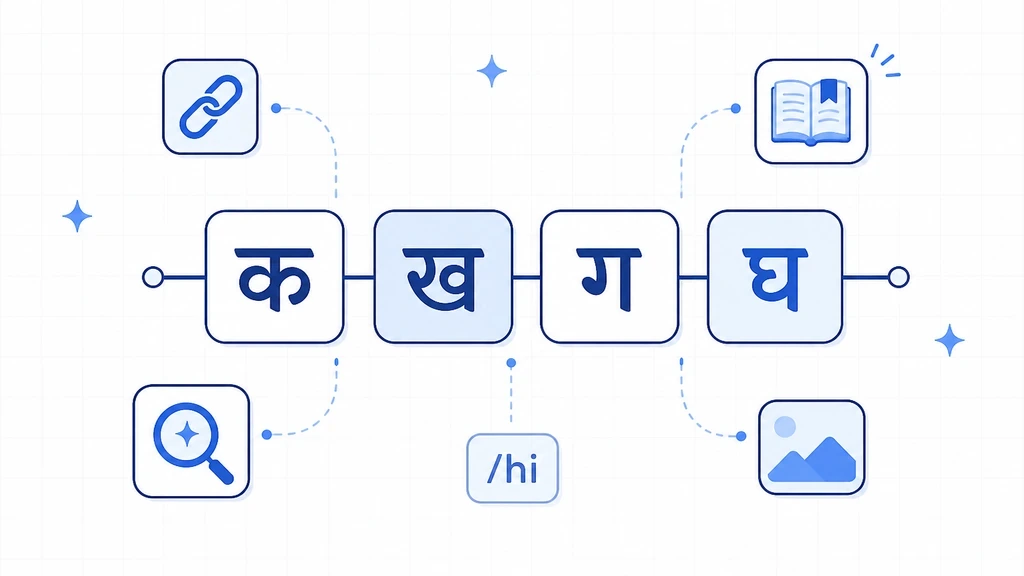
If your brief says “translate the website to Hindi,” stop treating the job as a full Devanagari overlay by default. Hindi website localization sits beside a market truth: many Indian users are comfortable in English UI, yet Hindi still unlocks trust and reach that English-only never will. The craft is knowing when to use Hindi, when to stay bilingual, and when Hinglish belongs only in ads.
This article is a launch guide for a Hindi (hi) website version: strategy choice, Devanagari rendering, formal vs everyday register, crawlable URLs, checkout QA, MTPE vs human review, SEO pitfalls (script vs transliteration), and a checklist you can actually run.
What does it take to translate a website to Hindi beyond swapping strings?
Beyond CMS fields, you need an explicit product strategy (Hindi-first UI, English product plus Hindi marketing, or deliberate bilingual UI), fonts and CSS that survive Devanagari conjuncts in buttons and narrow cards, a Hinglish policy that keeps billing clean, a register decision (textbook formal vs everyday Hindi), and a search plan for Hindi-script queries you can actually support with quality pages. Missing fonts read as broken localization even when the translation is good.
Questions this guide answers
- What does it take to translate a website to Hindi beyond swapping strings?
- Which Hindi locale or regional variants should you choose?
- What script, typography, and layout issues are unique to Hindi?
- How should URLs, hreflang, and indexing work for a Hindi site version?
- What onboarding and checkout nuances matter in Hindi?
- Should you use AI translation, MTPE, or human review for Hindi?
- What SEO mistakes specifically hurt Hindi pages?
- How do you launch and measure a Hindi website version?
Quick answer: translate your website to Hindi the right way
A durable Hindi launch looks like this:
- Choose a strategy, not a default. Hindi-first product UI, English product plus crawlable Hindi marketing, and deliberate bilingual UI are three different systems.
- Ship
hi(oftenhi-IN) as its own crawlable URL when you want Hindi search—not a cookie-only switch and not machine paragraphs bolted under an English template. - Prototype nav, cards, checkout, and emails with real Devanagari—conjuncts, line-height, and button padding fail on Latin-first themes.
- Keep Hinglish in campaigns if that is your brand; keep billing, permissions, and legal copy in cleaner Hindi or English by policy—not by accident.
- Decide which query surfaces you can support: Hindi script, transliteration, or both—then do not publish thin auto-Hindi doorways for the rest.
- Add reciprocal hreflang, same-language canonicals, and sitemaps before you scale.
- Put product nouns (including English UI terms you deliberately keep) in a glossary so MTPE cannot flip register or invent textbook Hindi on consumer screens.
CSA Research’s survey of 8,709 consumers in 29 countries found 76% prefer buying with information in their own language and 40% will never buy from websites in other languages. That still holds in India when many users also read English: checkout, invoices, and support in a language people trust still matter. Google’s helpful-content guidance favors people-first pages; a Hindi nav around English body copy is a weak locale. For market-versus-language strategy, read how international SEO differs from multilingual SEO.
Choose the right Hindi locale
Most teams should ship hi with an India-oriented hi-IN URL if Hindi discovery is in scope. That is a reasonable first release. It is not a license to mix textbook formal Hindi, ad Hinglish, and leftover English legal templates in one file and call it “the Hindi locale.”
Three viable strategies:
- Hindi-first product — Devanagari UI for mass-market consumer flows.
- English product + Hindi marketing — common for SaaS. Still needs crawlable Hindi pages if you want Hindi search.
- Deliberate bilingual UI — high maintenance. Needs design rules for which strings stay English.
Hinglish works in campaigns; inside billing and permissions it often feels sloppy. Put that boundary in the brief.
Hindi has register and regional flavor. You can still architect one hi message file on day one. You should not pretend a literary, Sanskritized voice automatically converts a consumer checkout. Everyday clarity usually converts better—have a native editor set the dial.
Also decide how you will handle names and addresses. Forms that reject Devanagari or force ASCII-only names will fail after the strings look “translated.” If you keep English UI, still localize trust pages users see before they pay.
Hindi script, typography, and layout nuances
Hindi on the web is a Devanagari rendering project. Conjuncts, matras, and line-height need font QA. Latin-first CSS clips buttons, wraps badly in mobile nav, and treats Hindi as “slightly taller English.” Test real Hindi in mobile nav and narrow cards.
Layout rules that prevent launch-week screenshots:
- Prototype key screens with real Hindi copy—not lorem in Devanagari-looking placeholders.
- Increase line-height versus a Latin-first theme so conjuncts have vertical room.
- Increase button padding; do not shrink type to keep a one-line English CTA.
- Ship production fonts with Devanagari coverage in UI, email, and PDFs. Fallback to a system Hindi face is better than tofu; silent Latin fallback is a quality failure.
- Watch card titles, badges, and table headers—clipping shows first there.
- Confirm mixed English+Hindi strings (common in bilingual UI) do not collide in one line-height.
Dates and numbers are part of the layout contract: day-month-year in running text, INR when you sell in India, PIN codes rather than ZIP. Decide explicitly whether consumer pricing uses lakh/crore. Sorting Hindi lists as English ASCII is not a collation policy.
Cadence matters. Formal vs everyday Hindi changes how instructions feel. Consumer products usually want clear everyday wording. Over-formal machine output is a common MT failure mode: it looks “correct” and still feels like a textbook. Error messages should name the fix in language people actually speak.
Mixed English+Hindi in one button needs extra width and a deliberate style, not a default English font with Hindi fallback mid-word.
Crawlable URLs, hreflang, and indexing
Google recommends different crawlable URLs for each language or region version rather than cookies or browser language alone. Google determines page language primarily from visible content—so a translated nav around English body copy is a weak Hindi version. Give Hindi its own folder or host pattern (/hi/, /hi-in/) and keep that pattern consistent across templates, analytics, and internal links.
If you keep English UI but want Hindi discovery, publish real Hindi landing and help pages with crawlable URLs—not machine paragraphs bolted under an English template. If you ship Hindi UI, keep English available via selector for users who prefer it, without auto-redirect traps.
Hreflang annotations must be reciprocal across the alternate set you declare. Each locale URL should carry a clear canonical that prefers the same-language preferred URL when duplicates exist. Do not canonical a Hindi page to its English equivalent.
Bing Webmaster Guidelines emphasize crawlable, useful content and clear site structure across markets. Build once for shared foundations, then monitor Google Search Console and Bing Webmaster Tools where you operate both. Google advises against automatically redirecting users based on assumed language or location; offer a visible selector that links to the Hindi URL instead. IP-guessing “India → /hi” traps travelers, VPNs, English-preferring users, and crawlers.
URL policy and on-page policy can differ: you may use ASCII slugs for operational reasons, but titles, H1s, and body copy should be the script you claim to support. If you only index Devanagari pages, do not promise transliteration coverage. Hindi-script and transliterated queries both exist; decide which surfaces you can realistically support with quality pages. Thin auto-Hindi doorways help no one.
Indexed H1s in textbook Hindi can mismatch how people search. Set register in the brief, not as an afterthought.
Onboarding, trust, and checkout in the target language
Hindi trust pages do more work than a translated feature list when you ask broader audiences to pay. Many Indian users will complete an English SaaS signup; enough will not complete checkout or support in a language they do not trust. Treat privacy, terms, and payment copy as first-class localization even if the app shell stays English.
Practical Hindi conversion checks:
- Strategy is visible: Hindi-first, English+Hindi marketing, or bilingual rules—not mixed by page.
- Homepage, ads, and product UI respect the Hinglish boundary (ads can mix; invoices usually should not).
- Forms accept Devanagari names and addresses, or they explain why a Latin field is required.
- Cookie and consent strings are reviewed in the actual banner—Devanagari wraps differently than English.
- Pricing, invoices, and currency language match the market you claim to serve.
- Support macros and transactional email render Devanagari; a “safe ASCII” email template is a leak.
- Error messages use everyday Hindi (or the English you deliberately kept), not empty formal apology.
- Mobile typing: people may search in Hindi script or transliteration—QA both if you support both, but do not ship thin pages for the one you cannot maintain.
You need homepage and product explanation in the languages you claim, plus authentication, pricing, checkout/billing, privacy basics, support entry points, and legal pages.
AI, MTPE, and human review for this language
Should you use AI translation, MTPE, or human review for Hindi? Use risk to choose the workflow—not tool branding:
- Raw machine translation: fine for internal drafts only. Models produce textbook formal Hindi, dump Hinglish in the wrong places, and ignore Devanagari layout.
- MTPE (machine translation + post-editing): a solid default for many product and support pages when the glossary locks product nouns and English terms you intentionally keep.
- Human translation / brand editing: homepage, pricing, campaigns, cookie/consent, legal-adjacent pages, and any bilingual pattern that must look designed.
A practical review loop for Hindi:
- Strategy and glossary: which strings stay English, which are Hindi, where Hinglish is allowed.
- MTPE draft against that glossary and register (everyday vs formal).
- Brand editor pass on homepage, pricing, and key landing pages.
- Native editor pass on instructions and errors so they do not sound like a textbook.
- Staging QA at mobile widths, including email, PDFs, and button clipping.
People-first helpful content expectations apply in every language. Low-quality machine-only Hindi pages can look complete in a CMS while still failing users and search quality bars.
Hindi-specific SEO pitfalls
Hindi searchers look for language they can read, in the script they typed. Translating English head terms word-by-word, or ranking Romanized titles when you only have Devanagari pages (or the reverse), misses how people actually search. Do Hindi keyword research for the surfaces you support, then write titles and H1s that match those queries.
Localize titles, meta descriptions, and headings per Hindi URL. Do not reuse one English metadata set across locales.
Mistakes that specifically hurt Hindi pages:
- Thin auto-Hindi doorways that fail helpful-content expectations.
- Boilerplate-only translation — chrome Hindi, body still English.
- Missing Devanagari fonts so indexed pages look broken.
- Hinglish in billing while ads promised a clean Hindi product (or the reverse, unplanned).
- Cookie-only language switches that hide the Hindi URL from crawlers.
- Broken hreflang (missing return links).
- Automatic geo redirects that trap English-preferring users and bots.
- Transliteration pages you cannot maintain competing with Devanagari URLs without a canonical policy.
- Textbook titles that do not match everyday search language.
Fix strategy, fonts, and architecture before you scale content volume.
Launch checklist
Use this checklist when you are ready to ship Hindi:
Where GlotEO fits
Hindi is a strong fit for a governed locale: product nouns must stay consistent across Devanagari updates, and English UI terms you keep must not drift. Glossary and memory in the website localization platform keep register, bilingual rules, and feature names stable while layout-tested copy ships. Pair that with multilingual SEO tooling so Hindi URLs, hreflang, and metadata stay reviewable as you expand. Compare GlotEO pricing and plans when you scope the first hi release, or start from a broader website translation workflow if you are still choosing languages.
Explore GlotEO website localization when JSON dictionaries and unmarked MT drafts are no longer a safe way to ship hi.
Citations
- Supports guidance cited in this article (Bing Webmaster Guidelines)
- Supports guidance cited in this article (Can't Read, Won't Buy – B2C: Consumers Prefer their Own Language)
- Supports guidance cited in this article (How to specify a canonical URL with rel=canonical and other methods)
- Supports guidance cited in this article (Creating helpful, reliable, people-first content)
- Supports guidance cited in this article (Tell Google about localized versions of your page)
- Supports guidance cited in this article (Managing multi-regional and multilingual sites)